


The History of ACBBA
ACBBA emerged from the shared conviction of a small group of Azorean citizens who believed the traditional whaleboat still had a meaningful role to play in contemporary life. They saw in these vessels not only a symbol of the islands’ maritime past, but also an opportunity to bring people together through sport, culture, and community. What began as a grassroots initiative soon evolved into a broader mission: to rekindle interest in whaleboats across all the islands of the archipelago.
A civic movement aligned with a changing maritime world
The creation of ACBBA coincided with a growing regional and international focus on the “Blue Economy,” a framework that includes the National Strategy for the Sea, European Maritime Policy, the extension of the Continental Shelf, and the protection of European Maritime Heritage
Furthermore, the issue of establishing an association for the development of the sporting aspect is part of a future-oriented dynamic associated with the much-discussed new Blue Economy, which highlights such relevant issues as the National Strategy for the Sea, the European Maritime Policy, the Extension of the Continental Shelf, the European Maritime Heritage, etc., where the Azores have a leading role to play.
In each of these areas, the Azores hold a strategic and cultural role. The founders recognized that preserving and revitalizing the whaleboat tradition could contribute meaningfully to this wider conversation.
Acting as private citizens — guided by spontaneity, initiative, and a sense of responsibility — they stepped into the public arena with the intention of safeguarding a heritage that belongs to all Azoreans.
The return of Senhora de Fátima
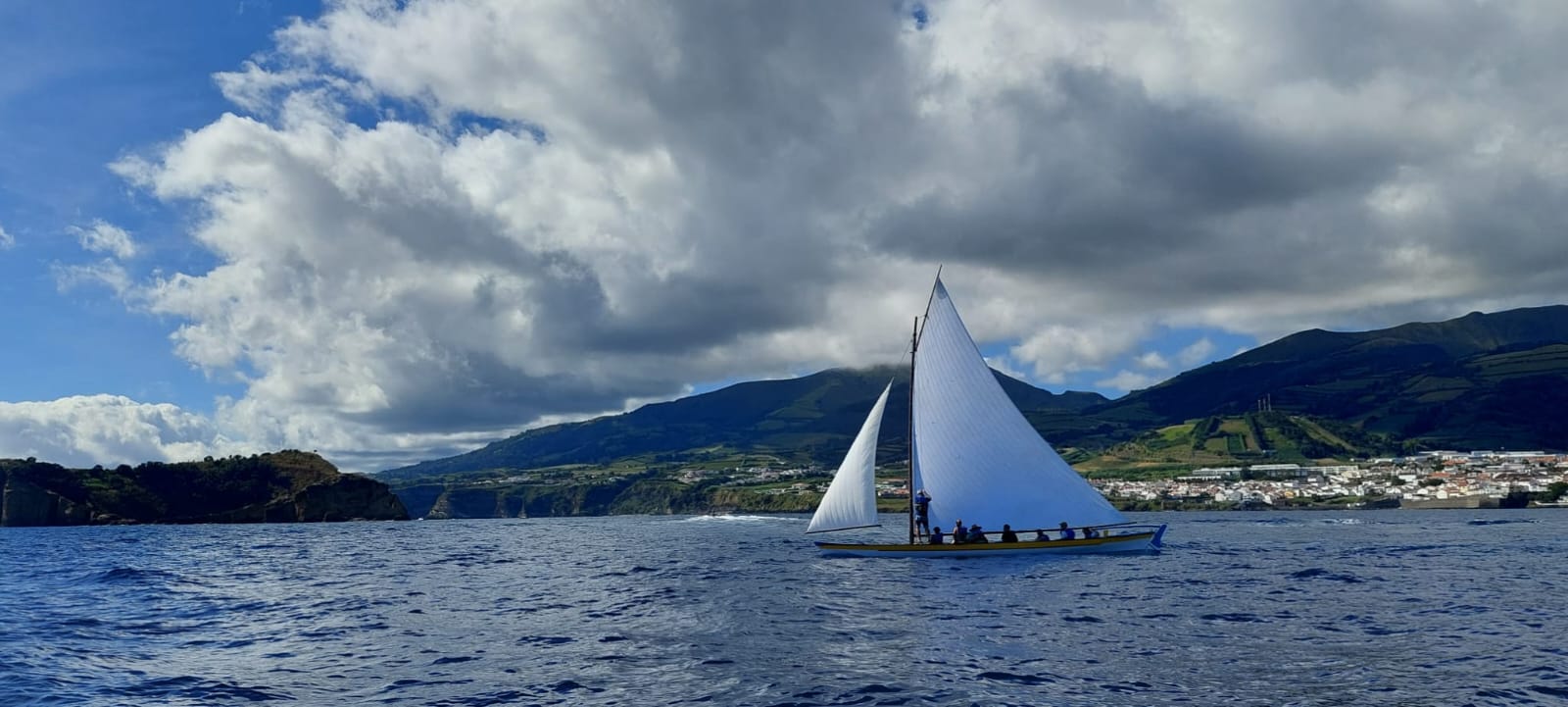
The association’s first major achievement was securing a protocol for the transfer and use of the whaleboat Senhora de Fátima (SG‑98‑B). Built in 1946 in Capelas by whale‑hunting entrepreneur Cristóvão Mota Soares, the vessel was fully rebuilt in 2010 by TERRA AZUL as part of a social‑responsibility project promoted by the whale‑watching company based in Vila Franca do Campo. For more than a decade, Senhora de Fátima remained the only traditional whaleboat actively sailing on the island of São Miguel. Her return to the water marked the beginning of ACBBA’s hands‑on work in preserving and revitalizing this maritime tradition.
Expanding activity through sport and heritage
From that starting point, ACBBA began promoting the participation of men’s and women’s teams in rowing regattas in Pico and Faial, and supporting sailing teams in cultural and sporting events throughout the region. These efforts helped reintroduce the whaleboat to the public not as a relic of the past, but as a living, dynamic vessel capable of inspiring pride and participation.
Today, the association also cares for two additional heritage boats — Santa Madalena and Veloz — both officially registered as part of the Regional Whaling Heritage. Restoring these vessels is a central priority. Their cultural and historical significance is immense, but equally important is their potential to expand rowing and sailing opportunities for adults, strengthening the sporting dimension of the whaleboat tradition.
Join us
Become part of our community.
Become a member of ACBBA and contribute to the preservation of Azorean whaling culture. Together, we value what unites us and build the future of this ancestral tradition.